
Anker vs BLUETTI: C1000 Gen 2 and Elite 100 V2 Compared
Compare the US Anker SOLIX C1000 Gen 2 and BLUETTI Elite 100 V2 by continuous AC output, solar-input limits and charging conditions. Both have 1,024Wh nominal capacity.
Verdict — Anker vs BLUETTI: Choose the Anker SOLIX C1000 Gen 2 if your planned loads make its higher 2,000W continuous AC rating useful. Choose the BLUETTI Elite 100 V2 if you have a compatible solar array and want its higher 1,000W solar-input ceiling. Both have 1,024Wh nominal capacity; neither rating proves longer runtime or faster real-world charging.
VoltLore earns a commission from qualifying purchases made through links marked “Paid link”, at no extra cost to you. As an Amazon Associate, VoltLore earns from qualifying purchases.
Images in this story
Image 1 of 3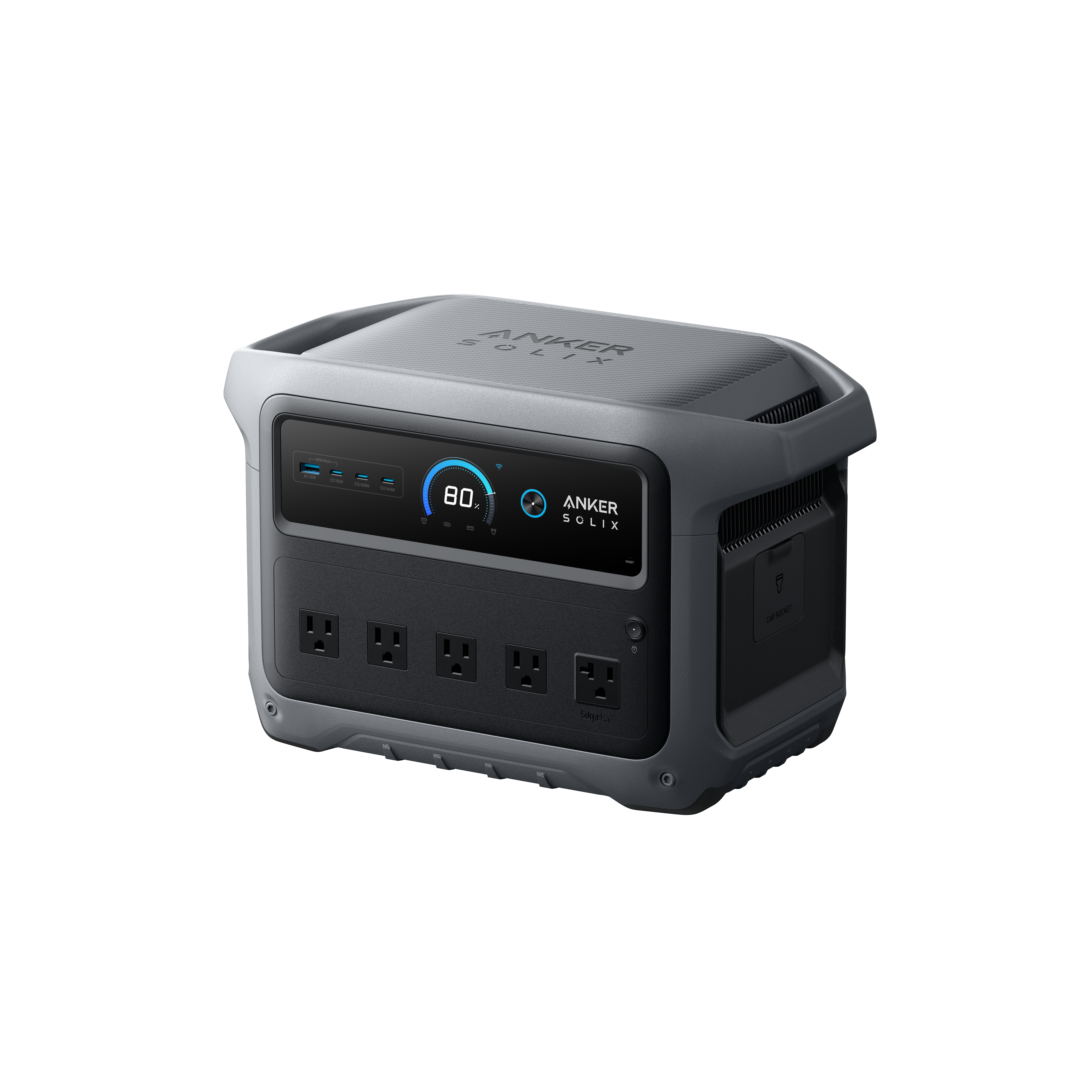
Products in this image
- For a higher continuous AC ratingAnker SOLIX C1000 Gen 2 · C1000 Gen 2 · US 1,024Wh / 2,000W · station onlySee on AmazonPaid link
On this page
Verdict — Anker vs BLUETTI: Choose the Anker SOLIX C1000 Gen 2 if your planned loads make its higher 2,000W continuous AC rating useful. Choose the BLUETTI Elite 100 V2 if you have a compatible solar array and want its higher 1,000W solar-input ceiling. Both have 1,024Wh nominal capacity; neither rating proves longer runtime or faster real-world charging.

Our top picks
- For a higher continuous AC ratingAnker SOLIX C1000 Gen 2Buyers whose checked combination of running loads benefits from the Anker’s 2,000W rating rather than the BLUETTI’s 1,800W rating. Check total load…See on AmazonPaid link
- For a higher solar-input ceilingBLUETTI Elite 100 V2Campers with compatible panels who can make use of a higher input limit. BLUETTI lists up to 1,000W, versus Anker’s 600W. Sunlight, panel…See on AmazonPaid link
Manufacturer-supplied product image: Anker SOLIX. This is not a photograph from our own test.
Side-by-side comparison
| Feature | Anker SOLIX C1000 Gen 2 | BLUETTI Elite 100 V2 |
|---|---|---|
| Nominal Capacity | 1,024Wh | 1,024Wh |
| Rated AC Output | 2,000W | 1,800W In Total, 120V, 15A |
| Max Solar Input | 600W (60V max) | 1,000W Max., 12V-60V, 20A Max. |
| Manufacturer-listed Weight | 11.3 kg / about 24.9 lb | 11.5 kg / about 25 lb |
| Advertised AC Charging | Full charge in 49 minutes with app-enabled UltraFast mode | 80% charge in 45 minutes using 1,200W AC TurboBoost |
Note: Values are based on manufacturer specifications. Surge/boost numbers are omitted unless operating modes are explicitly verified.

Original VoltLore chart from the manufacturer specifications above; not measured performance.
Which to choose for your situation

Photo: BLUETTI / GlobeNewswire. Solar panels and tools shown are separate accessories; the photograph does not establish what the standalone unit includes.
Anker SOLIX C1000 Gen 2: For a Higher Continuous AC Rating
Who it's for: Buyers whose checked combination of running loads benefits from the Anker’s 2,000W rating rather than the BLUETTI’s 1,800W rating. Check total load and appliance startup requirements separately; the higher rating does not add battery capacity.
See on Amazon (Paid link)
BLUETTI Elite 100 V2: For a Higher Solar-Input Ceiling
Who it's for: Campers with compatible panels who can make use of a higher input limit. BLUETTI lists up to 1,000W, versus Anker’s 600W. Sunlight, panel orientation, temperature, cable losses and the battery’s charging conditions determine actual input; we did not measure charging speed.
See on Amazon (Paid link)
Differences and limits
Power ratings do not equal runtime. A 1,024Wh battery will deplete quickly when running high-draw appliances, regardless of whether the unit is an Anker or BLUETTI. Additionally, charging times cannot be directly compared because the endpoints differ: Anker claims 49 minutes to reach 100% charge using its UltraFast mode, while BLUETTI states 45 minutes to reach only 80% charge. This desk comparison does not establish whole-home backup suitability or uninterrupted operation for critical equipment.
Before you buy
- Verify Included Accessories: Check what comes in the box. The Anker SOLIX C1000 Gen 2 includes an AC Charging Cable and Safety/Warranty Card, but no solar panels. Similarly, confirm if your chosen bundle includes panels, as they are often sold separately.
- Confirm Appliance Startup Demand: Check the combined running load and startup demand against the current manual; a continuous rating alone does not establish startup compatibility. Anker rates 2,000W, while BLUETTI rates 1,800W total output at 120V, 15A.
- Check Solar Input Limits: If using larger panel arrays, note that BLUETTI supports up to 1,000W solar input (12V-60V, 20A Max.), whereas Anker supports 600W (60V max).
- Review Charging Endpoints: Do not directly compare fast-charging times without noting endpoints. Anker claims full charge in 49 minutes with UltraFast enabled in the app, while BLUETTI claims 45 minutes to reach 80% charge.
- Assess Portability Needs: Both manufacturer-listed weights are around 25 lb. Plan where you will carry and store the unit, and check dimensions and handle clearance.
- Understand App Features: Both units offer app management. Anker requires enabling UltraFast Charging in the app's Input section. BLUETTI allows monitoring via the BLUETTI App, including low-battery alerts and Power Memory Mode for auto-resume after outages.
FAQ
Can I use these units for UPS backup?
Check the current manual against the transfer tolerance and power requirements of your equipment. A manufacturer switching-time specification is not a guarantee that every device will remain running; we did not test transfer behavior.
Do these batteries come with solar panels?
The links below target standalone units. Retailers also offer bundles, so verify the selected option and included items; a promotional photo with panels does not mean they are included.
Is the 1,024Wh capacity usable for all my devices?
Not necessarily. The 1,024Wh is the nominal capacity. Actual usable energy depends on conversion losses and the efficiency of the connected device. High-wattage devices will drain the battery faster than low-wattage ones.
How we researched
This comparison relies on desk research using official product pages from Anker SOLIX US and BLUETTI US. We focused on the standard US editions of the C1000 Gen 2 and Elite 100 V2, excluding first-generation models or bundled kits. No hands-on testing was performed; all data regarding wattage, capacity, and charging times is sourced directly from manufacturer specifications. This comparison covers these two models rather than ranking every portable power station.
Check the Exact US Listings
As an Amazon Associate, VoltLore earns from qualifying purchases.
- Anker SOLIX C1000 Gen 2 on Amazon (Paid link)
- BLUETTI Elite 100 V2 on Amazon (Paid link)
Confirm the US outlet version, selected bundle, seller and delivery details before ordering.
Sources
More from VoltLore
BLUETTI AC50P: 504Wh Capacity, 700W Output and Buying Checks
A researched BLUETTI AC50P buying guide: distinguish stored energy from continuous output, match actual loads and solar input, and price the complete kit. No physical performance testing.
EcoFlow 220W Bifacial Panel: Check the Generation and Solar Input
Verify the EcoFlow 220W bifacial panel generation, electrical input match, charging cable and sunny placement before planning energy yield.
EcoFlow DELTA 3 Max: Check the 500W Solar Limit Before Buying
The standard DELTA 3 Max offers a 2,048Wh battery, but a good solar backup plan depends on refill speed and operating mode. Here are the limits that matter.